
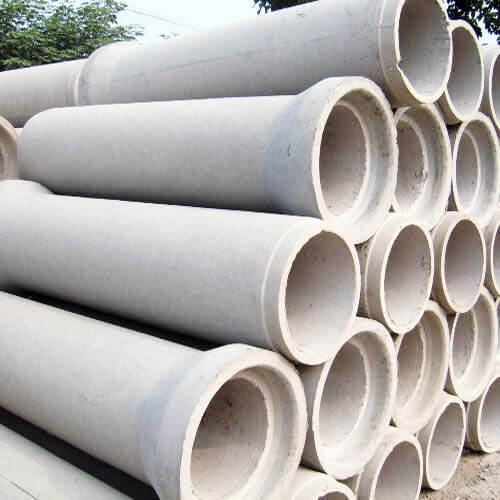
Socket Type Pipe
A socket-type pipe has an enlarged end forming a socket into which the spigot end of a similar pipe can enter to form a joint. This configuration is suitable where the project design calls for socket-and-spigot pipe connections.
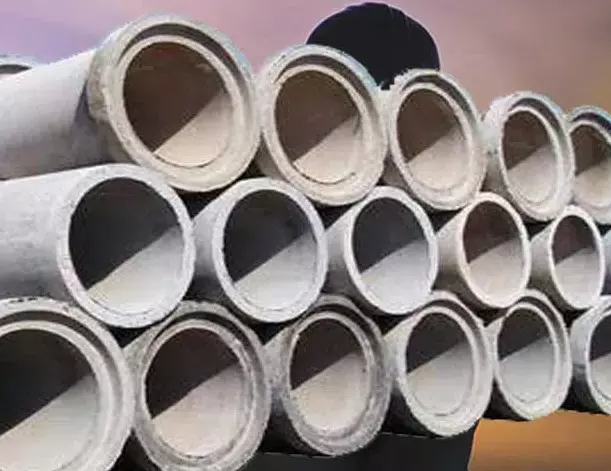

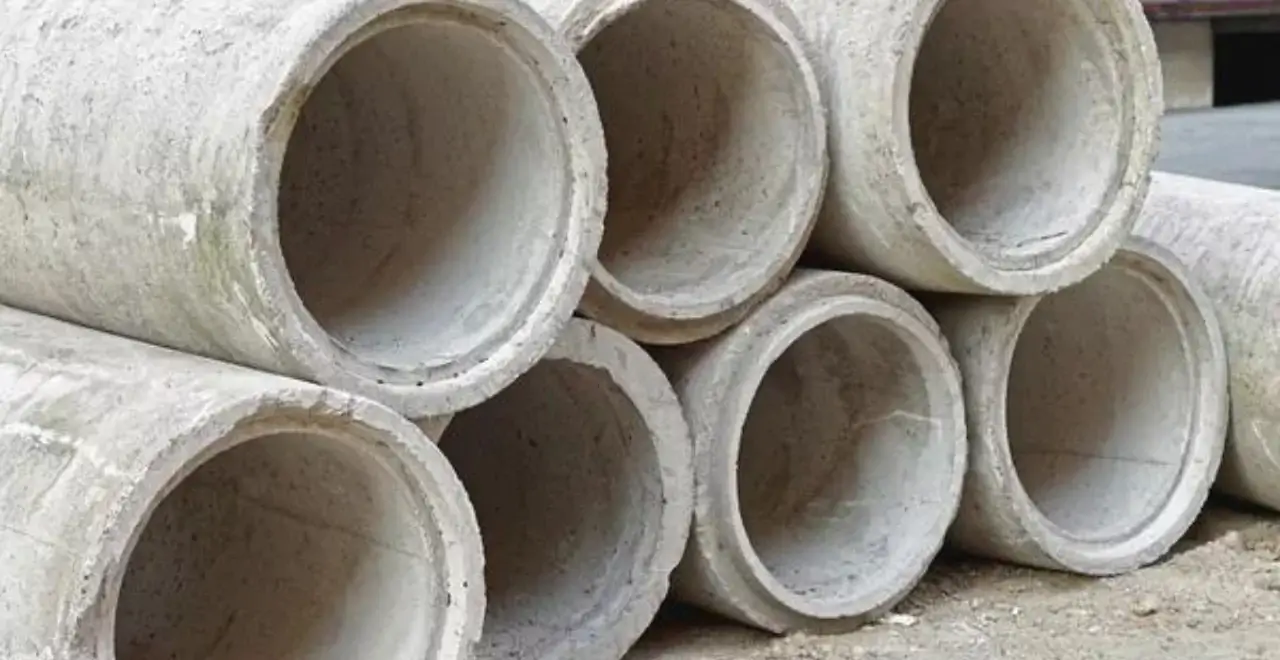
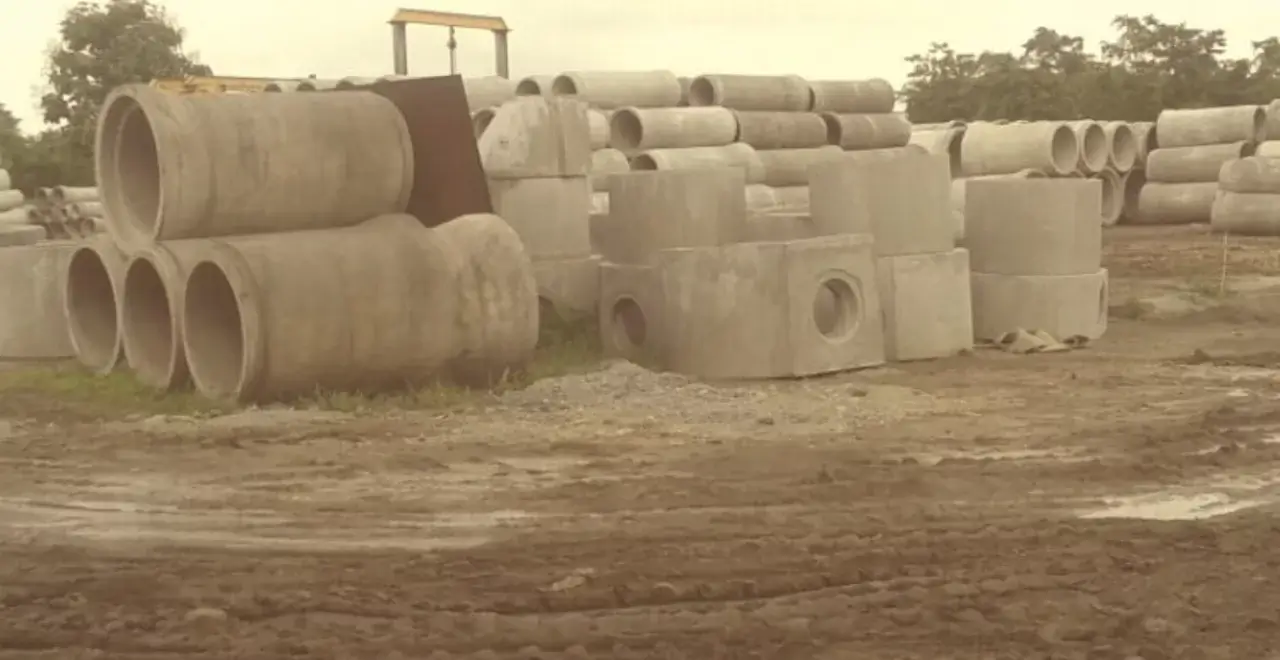
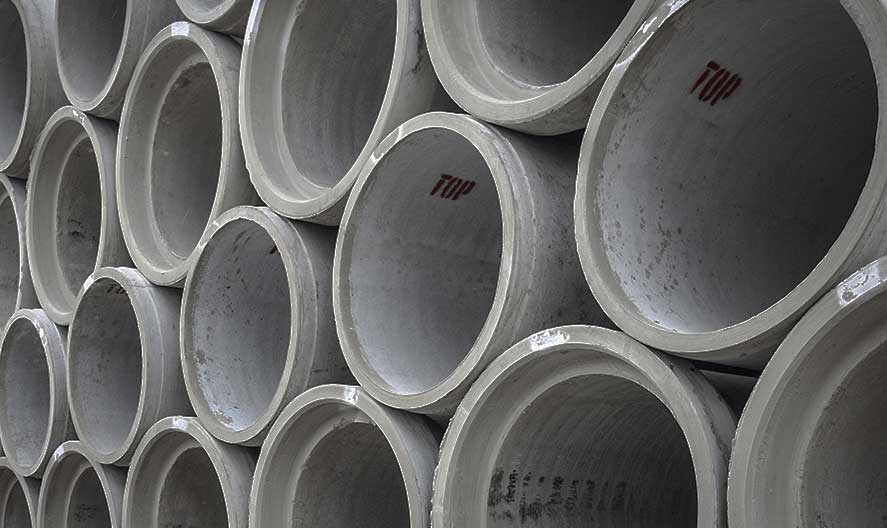
Choose the pipe configuration, size and supporting concrete product that matches your project application and specification.
We manufacture quality RCC (Reinforced Cement Concrete) pipes used for water-supply schemes, drainage works, culverts and other civil-construction applications. The supplied company material describes centrifugal spinning production and testing across multiple parameters, with pipe configurations including plain type, spigot type, socket-end type, tongue-and-groove type and groove-end type.
Different joint arrangements are selected according to the pipeline design, installation method and project requirements.
A socket-type pipe has an enlarged end forming a socket into which the spigot end of a similar pipe can enter to form a joint. This configuration is suitable where the project design calls for socket-and-spigot pipe connections.
A barrel-type pipe has a uniform internal diameter and wall thickness along its length, with one or both ends joined using short-length collars of slightly larger diameter and compatible construction.
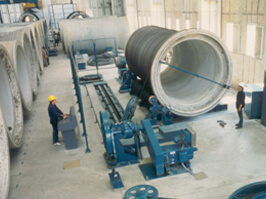
Cylindrical steel moulds of specified dimensions are mounted over a mechanically revolved platform or flywheel and spun at a controlled speed. The resulting centrifugal force acts outward on concrete placed inside the mould. During rotation, the concrete is compacted and manually smoothed or levelled until it assumes the required pipe shape and wall thickness.
The supplied company material describes the Rocla process as a spin-moulding method originally developed and patented in Australia. Concrete pipes produced using this method can be manufactured in different sizes, with accurate dimensions and high concrete compaction when the process is correctly controlled.
The material also describes the machinery as suitable for installation at permanent factory premises or temporary project sites, and notes its use in Japan, Europe and Africa.
The following product categories are retained and reorganized from the supplied company content for easier reading and search discovery.
Non-reinforced and reinforced concrete pipe products in varying diameters, with the supplied range listing approximately 4 to 60 inches.
Hollow, octagonal, tapered reinforced concrete poles, with the supplied material listing lengths from approximately 12 to 36 feet.
Standard-dimension solid and hollow blocks manufactured using a mechanically operated vibrating device.
Cast-concrete roof and floor tiles available in selected designs, colours and sizes.
Selected reinforced concrete building components including beams, slabs and columns.
Curve stones and kerb products in different types, sizes and designs.
Concrete garden tables, chairs, benches and selected garden lighting products.
Roman, Italian, Spanish, pre-coated pillars, arches and related decorative concrete elements.
Paving stones, U-channels, electric cable tiles, embossed marble tiles and main-door pillar lights.
The term “pipe” signifies a hollow cylinder made of any suitable material, having a uniform internal diameter and wall thickness along its length except at the joint.
The term “Pipe” signifies a hollow cylinder, made of any suitable material, having a uniform internal diameter and wall thickness all along its length except for the joint.
ASTM C14-82
Class 1: Listed in the supplied original material; no diameter range was specified for this class.
Class 2: Diameters range from 4 to 36 inches.
Class 3: Listed in the supplied original material; no diameter range was specified for this class.
ASTM C 76-86
Class I: Diameters range from 60 to 82 inches.
Class II: Diameters range from 4 to 36 inches.
Class III: Diameters range from 12 to 108 inches.
Class IV: Diameters range from 12 to 84 inches.
Class V: Diameters range from 12 to 72 inches.
The supplied company material highlights several practical advantages of reinforced and non-reinforced concrete products compared with some metallic alternatives.
The supplied content describes the basic ingredients of RCC products as locally available materials, potentially reducing dependence on imported raw materials.
Unlike metallic products that may require protection against rust and periodic painting, properly manufactured concrete products generally require less routine surface maintenance.
The supplied material records successful use of RCC products in coastal areas where environmental exposure can accelerate corrosion of susceptible materials.
The supplied content notes that RCC product fabrication can use relatively simple mechanical equipment and ordinary production skills when appropriate process controls are followed.
Unless specifically desired and directed otherwise by clients/customers, the supplied original material states that concrete pipes are manufactured in accordance with specifications and design laid down in the respective parts of the “Annual Book of ASTM Standards”. ASTM stands for American Society for Testing and Materials.
Application: Non-reinforced concrete pipes for sewerage, storm drainage and culverts.
Pipes have been classified into three basic categories, Classes 1 to 3. Minimum strength and wall-thickness requirements for different internal diameters, ranging from 4 to 36 inches, are tabulated.
Criteria for final approval, acceptance or rejection are based on test results showing strength, absorption, permeability and hydrostatic properties of selected pipes and their visual inspection for finishing and other physical features.
Methods of sampling, marking, testing/re-testing the pipes and concrete mixing, preparation and curing are defined. Permissible strength is illustrated, and related documents applicable to related aspects are identified.
Metric equivalent referenced in source: C 76M-82b
Application: Reinforced concrete pipes for culverts, storm drainage and sewerage.
Pipes have been classified into five basic categories, Classes I to V, with respective design standards given in five tables.
Criteria for approval, acceptance or rejection are based on tests performed on pipes to determine load-bearing capacity, material quality and water absorption, together with inspection for visual defects and imperfections.
As an alternative, the crushing test on concrete cores cut from the pipe barrel or a curved concrete cylinder may be used against the load-bearing test.
The source describes complete details for placement of steel reinforcement inside pipe walls, space required between each steel layer, concrete cover toward internal/external wall surfaces, and lap lengths for welded or overlapped bars/wires.
Permissible variation in internal diameter, wall thickness, pipe length, opposite ends and the position/area of reinforcement are also described.
Fabrication process and technical data below are retained from the supplied original product information.
The reinforced steel bars within the steel mould walls of the hollow, octagonal shape poles are pre-tensioned and tied in the correct position and alignment, duly ensuring a uniform concrete cover of the specified minimum all around.
Highest concrete compaction is subsequently accomplished through known methods of vibration, including internal, external and centrifugal vibration, during and after spinning of the mould filled with the desired quantity and quality of concrete.
After a suitable time interval for initial cement setting, the mould is removed and the pole is left to dry for a short while before being lifted with mechanical pulleys at predetermined spots and submerged completely into adjoining water tanks for curing and strength development.
Curved ribbed brackets for single/double lamps and fixtures are also manufactured, with the source describing their appearance as suitable for different environments.
The supplied source notes that dimensions and corresponding strengths vary in proportion to standard values for different pole lengths.
Share your diameter, length, quantity, application, joint type, project location and required standard so the requirement can be reviewed properly.
Socket-type pipes have an enlarged socket end designed to receive the adjoining pipe end. Barrel-type pipes have a more uniform outside profile and are used with a compatible collar or jointing arrangement. The correct option depends on the project design and joint specification.
Pipe diameter is selected from the hydraulic or capacity requirement, while pipe class and reinforcement depend on loading, burial depth, bedding, installation conditions and the project specification. Final selection should follow the engineer or consultant's design requirements.
Project-specific requirements can be discussed before ordering. Share the required dimensions, quantity, application, joint configuration, testing requirements and relevant drawings or specifications so feasibility can be confirmed.
Confirm the approved diameter, class or reinforcement requirement, joint type, quantity, delivery access, unloading arrangements and any inspection or documentation requirements before dispatch.